Sekulow Weekend
Ministries > SEKULOW with Jay Sekulow
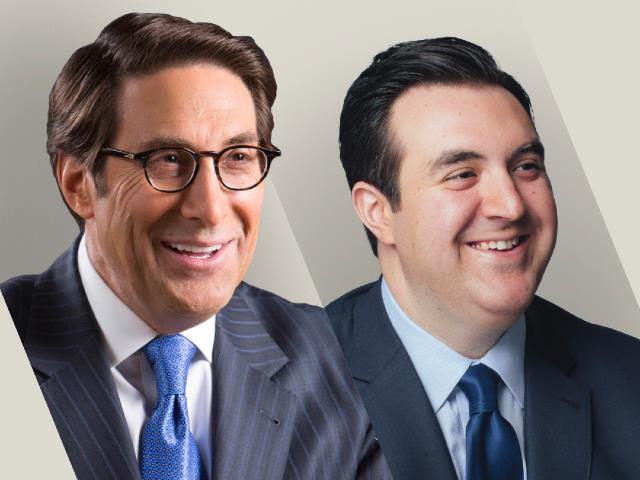
Logan Sekulow and Will Haynes discuss all things Canada as Canadian military chaplains are ordered not to mention 'God.'
Logan Sekulow: On today's show, we're talking all things Canada, as military chaplains there have been ordered not to mention God. Keeping you informed and engaged now more than ever, this is Sekulow. We want to hear from you. Share and post your comments, or call 1-800-684-3110. And now your host, Logan Sekulow. It's Friday, August 28th. Here with Will Haines, it is Logan Sekulow. We've got a packed show today. We've got Rick Grenell joining us later. We've got a lot of ACLJ content to cover. And we're talking all things Great White North. We're talking about our friends in Canada. You probably saw President Trump make his statement saying Lake Ontario—no more. Now it is Lake America. But that is just one of a few things that have come out in terms of Canada over the last few days and weeks. Some of them are actually rather shocking. I think a lot of our viewers—most of you are American or North American or at least probably from the United States of America—but there's actually a good chunk of you that maybe watch from Canada and you see what's happening in your own country. I know there's a lot of you who want to push back on what's happening. There are a few topics that have happened here recently that I think we have to address. So let's talk about it. President Trump obviously makes this statement. It's a bit of a troll. We know this. This is something he does. What do you think about that? Some people think it's very petty. Some people think it's just funny. Some people are like, "Yeah, let's do it, like the Gulf of America." What do you think? 1-800-684-3110. On the other hand, there have been some things out of Canada recently that I think we need to address and honestly need to see. You know, we don't have a Canadian Center for Law and Justice. We've discussed it before, and it just doesn't seem to be the right place for us. Some of it is because of some of these sweeping things they have that feel, sadly, very anti-God or anti-religious that will happen in this country. And again, this is no criticism of the people of Canada. We love the people of Canada. It's really what happens within their own government. This was a statement that was released just last month, under a month ago. This is for military chaplains. As we know, Pete Hegseth and those here in the United States of America have certainly made it a little bit more open to explicitly religious content, especially coming from chaplains, making it more available to speak openly about their faith. This is what's coming out of Canada. Here's the new instructions about public remarks made at any type of public or semi-public event. They shall uphold the principles of state religious and spiritual neutrality by not using words, actions, or symbols that are specific to a particular spiritual or faith tradition on the part of the government of Canada. And what we've been able to dive into this, this means they cannot even use the word "God." It also instructs chaplains not to offer prayer at official events, including military ceremonies or commemorations. So you have chaplains, military chaplains, that are having their mouths taped right now, saying you can't mention not only your own specific religious beliefs in these things, you can't mention God, you can't pray. Why are they even there? Of course, this brings up a whole other point. But this is what's happening in other places. I think that's why we have to always keep an eye on what's happening in the United States of America and also be very appreciative of some of the rules that we have in place here, the Constitution that we have that allows definitely a more robust freedom of religion. So while we may have a sort of public dispute in terms of Lake Ontario versus Lake America, let's not forget what's going on. And at the same time, this is another one, which is wild, which you're probably not even going to believe. And I'll let Will take this one, because this one has to do with the September 11th attacks. And of course, we are very closely approaching the 25th anniversary of those September 11th attacks. So they need to make sure that everything is set in place when they start talking about it.
Will Haines: Well, and once again, I think this goes to even that discussion about the troll from the President about Lake America. The Prime Minister said that naming it Lake Ontario is naming reality. It's rooted in reality. Well, the Canadian Broadcasting Corporation has an internal memo telling people that as they cover the 25th anniversary of the September 11th attacks, do not describe those attacks as terrorist attacks. So it really seems that whether it be the chaplains or the CBC, Canada has a reality problem when it comes to words and their meaning.
Logan Sekulow: So you can't say "God" and you can't call terrorism "terrorism." You can't call the September 11th attacks terrorism. What do you think about that? And of course, any of your responses to President Trump's renaming. 1-800-684-3110. We'll be right back.
Logan Sekulow: Phone lines are open for you at 1-800-684-3110. Talking all things Canada, it seems like. And we are going to be talking a lot more as well, because it is still back-to-school week. Last day of back-to-school week and really the last day I'm going to be talking to you about our match right now that we have available for the rest of the month, which again is only a few more days. But it's back-to-school week and the next segment we're actually going to talk a little bit more about some of the work the ACLJ does to support students' rights. But before we get to there, we're going to keep things rolling on the Canada side of things. As we know, President Trump made his big statement, came out and said, "This is what I'm going to do here." He did it with the Gulf of Mexico becoming the Gulf of America. It feels like doing the same thing, but this time even maybe more targeted as it is Lake Ontario being switched to Lake America. So the next thing he needs is an ocean. So we'll see where this goes. But it does actually, as ridiculous as it sounds, I think there are important things happening in Canada that we need to bring up. And the two that we talked about in the first segment were number one, that military chaplains are being told they can't use the word "God," that they can't pray openly, that they can't really express their religious beliefs in any kind of way that would be sectarian in nature. It just has to be this very neutral, spiritual, generic talk. And then on the other side, you have the CBC, which is their broadcasting company, saying, "Hey, when you are covering—our reporters, when you're covering 9/11—and we know that the 9/11 25th anniversary is going to dominate the news here in a couple weeks—don't say 'terrorist.' You cannot say 'terrorist attack'." So you can't say "terrorist attack" for 9/11, you can't say "God" if you're a military chaplain. And on the same token, you have the President saying they're the worst to deal with in terms of trade and we should not be as friendly as we are to them. Of course, Canada has had a very interesting few years in terms of our relationship between the United States and Canada. Definitely the most time it's been this contentious as far as I can remember.
Will Haines: Well, and once again, when you're looking at what words and what they mean, the dispute over the name of a lake where you have Prime Minister Carney from Canada saying that naming it Lake Ontario is rooted in reality, but at the same time you're seeing the attack on expression in Canada, whether it be through putting duct tape on the mouths of their chaplains in their military. The ACLJ has done a lot of work for chaplains in the military in the United States, because you've seen under some other administrations them try to do similar types of things here in America. Now, we fight for it and we push back and get victories for chaplains here in the United States. But then you also see what's happening with their state media. The Canadian Broadcasting Corporation is a Crown corporation. It operates quasi-autonomously from the federal government, but it's still state media. We don't really have that in the United States either. I think this is a time to also show when we've talked in weeks prior about the DSA wanting to turn us into more of a parliamentary-style government. This is one clear example of why we are opposed to that, why the founders were genius in the separation of powers that they put into our Constitution. Because you have a parliamentary system in Canada, like you do in England, and what have we seen over these past few years, really since 2020? You've seen a crackdown on the freedom of expression, the freedom of speech, the love of your country. And that's what's going on in those parliamentary systems. Even though they are Western governments and they have a lot of the rooted ideals that the United States had, our separation of powers has been able to maintain our foundations. But now we're even seeing attacks on that where they want it to be a more parliamentary system, a House of Representatives that's expanded and has a lot of power and has the executive branch under it. We don't want that. We want to be able to rest on the foundations of the United States. So when you have these disputes over the naming of the lake, it's silly in one sense, because we know what President Trump is doing and how offended they are by that. But at the same time, their state media on 9/11 is too concerned about the term "terrorist attack" that they're going to have to just call it a "hijacking" because it's too politically charged to call it "terrorism." Really, Canada?
Logan Sekulow: I have heard a lot of people have issues with the way I guess 9/11 is described. I have never heard one of them being you can't say that it was a terrorist attack. I mean, that is just about as normal as we've been saying for 25 years. So it's wild they would even have to have this statement. On September 11th later on, I'm putting out a special video and I think we're going to air it on here as well with John Ondrasik, who from Five for Fighting had this song "Superman." And I think it's a really good reminder of what we all went through on September 11th, what it all felt like, because it has been so long that you have people who are completely oblivious to what happened on that day. Your kids now treat it obviously as history. They probably were not there when it happened, or your grandkids. I taught in a university a couple years ago. None of my students were alive. Think about that. University students, not freshmen, university students were not alive during the September 11th attacks. They had not yet been born. So you have a whole new group of adults who did not go through what we went through. And I think you can see that in the rewriting of history. And you can see that through something like the CBC saying that this is not what we're doing here. And look, again, I think our Canadian viewers and Canadian listeners need to stand up and make some noise here. Because you don't hear that much, it feels like, in America about these issues. You just hear the trivial side. You just hear the sort of back and forth between our leadership that becomes very cartoonish. It isn't treated with respect. And the problem is I don't even know, truthfully, I don't know if the Canadian chaplains are upset about this. This could be something that is widely accepted. I mean, sure, there are people who are upset about it. But you know, I don't know if the pushback would be like it would be in the States.
Will Haines: Well, and once again, what you see is statements about this specifically, where one Member of Parliament did call it unnecessary and regressive. And this directive, it says if you're asked to pray as a chaplain, you are instead to offer a spiritual reflection without religion-specific language. They are policing language. They're saying you cannot be as a chaplain in our armed forces, you cannot be giving these words because that is as though you are speaking for the government.
Logan Sekulow: Remember the backlash that came from people online when Pete Hegseth put out the list of all the different chaplains that were going to be offered and how we're going to have a list of all these different groups and denominations? I'd say that's even more inclusive in many ways by saying we are going to try to staff essentially everybody. So if you are a Southern Baptist or you are a Presbyterian or you are a Catholic or you're Jewish or you're Muslim, that you are going to be assigned a chaplain who represents and respects your faith. Not this generic, you know, whatever spirituality. I understand and respect the idea of saying, "Hey, we want to make sure that we are inclusive here." And I think that's what something like Pete Hegseth was actually doing by doing that. The difference is being inclusive and actually spending the dollars on bringing in the right amount of people, instead of being, "Ah, maybe Canada just thinks we can't afford this many chaplains." But let's be honest here. This is the quote: "By avoiding language specific to any one religion, chaplains respect the dignity of all and help everyone present and engage with comfort, dignity, and the sense of belonging." Nothing wrong with that. But it is a problem when you say, "And you can't mention these words." And those words are as generic as they can be, like "God." Or you can't pray.
Will Haines: Well, it also says at public or semi-public events. What's a semi-public event? If there is a person within earshot? Because that kind of sounds like what we saw in Texas, where we're having to fight for a teacher where they said you can't pray if a student could see you—if you're in your car, if you're on property. So once again, it may seem easy at this point to be like, "Well, that's Canada, they're a lost cause, we're America, this is different." We're not that far away from it. We're not that far away from people trying these things here. They are constantly trying it. And we're always having to fight back.
Logan Sekulow: Phone lines are still open for you at 1-800-684-3110. As I said, it is back-to-school week. And we need to make sure before this week wraps up today that we tell you about all the incredible work the ACLJ has been doing. And look, you've seen a couple different videos we've put together. And what I like about these is we're not talking about videos or cases that happened thirty years ago, twenty years ago. We are talking about active cases, cases that either have just recently been resolved or are still currently in the fight. And the ACLJ team, our young group of lawyers, are really on the front lines of all of this. And I want to make sure that they get some airtime as well to tell you about the work the ACLJ is doing. So we come on here, we'll talk about the news, we'll give you some coverage here. We'll tell you everything that's happening we think you need to hear, you should hear, all of our different points of view. And of course, we always say we tell you the truth whether you like it or not here at the ACLJ and here on Sekulow. But that being said, when you donate to the ACLJ, you're also donating to, of course, not only this show and to make sure that our broadcast stays on, but you're representing so many ACLJ clients because they don't have to get a bill at the end. No legal fees are coming to them because, thankfully, that's absorbed by you, the ACLJ supporter, who decided that this is worth your while. Of course, it's tax-deductible and donations are doubled right now through back-to-school week and through our Impact Match, which is just about to end. So you want to do it today. Just go ahead and do it and be a part of the team. With that, I do want to kick it over to this special video presentation that we put together for you here at the ACLJ. Again, another case that you're not going to believe. It's back-to-school week. Backpacks, first-day photos, that nervous excitement every family knows. But for one Christian family in Washington State, this past year ended with a fight for something much more basic: their child's right to hold onto their faith inside a public school. At the ACLJ, we've spent decades defending the First Amendment rights of students—the right to pray, to speak, and to live out their faith without leaving it at the schoolhouse door. Our client's story is one of the clearest examples we've seen of what happens when a school forgets that.
Guest (Female): I usually just pass out these gospel tracts. It's kind of like these little booklets that share about Jesus.
Guest (Female): Several years ago, I represented a little girl who was simply trying to share the gospel with her classmates. And those school administrators decided it was appropriate to open her backpack and pull out her Christian tracts, confiscating them. Fast forward five years later. She's now a sixth grader at the middle school. And she was sitting in her math class like everyone else when she gets pulled out by the vice principal and told that she has to stop talking about Christianity with her classmates and that she cannot pass out her Christian tracts anymore.
Guest (Female): And they just pulled me out and said, "Oh, you can't pass out gospel tracts." And I'm like, "Why?" Because in school, you're allowed to share like any kind of belief, like any kind of religious, political beliefs. But for Christianity, you just have to be quiet about it. And I'm like, that's not really that fair.
Guest (Female): She came home from school and the first thing she told her parents is that we need to call the ACLJ because I need to talk to Christie. So we sent a demand letter and, yet again, this district gave us exactly what we asked for and a total apology that this will never happen again. But that's not the end of the story. We got a call again from that very student that she just got out of an assembly where she had to sit crying the entire time on something that was violating her religious beliefs.
Guest (Female): And I sat in the bleachers crying for the rest of the assembly. And then after the assembly, I went to my BFF and I hugged her and cried.
Guest (Female): No other school would have a child saying, "I'm not comfortable with this," and tell her, "I'm sorry, you don't have any other options. You have to stay there, and you're going to stay there crying."
Logan Sekulow: What this child went through wasn't a one-time misunderstanding. This was the third time her school crossed the line of her faith. That's why the ACLJ stepped in. We already sent this district three demand letters—three chances to correct the course. They took none of the chances, so we took them to federal court.
Guest (Female): We are ready and gearing up for one of the biggest fights of the ACLJ's life, because this is not just about what happened at this assembly. This is a long-standing precedent that this school has set: that she as a Christian will be targeted because of her faith.
Guest (Male): For them to push our daughter into something that—and she was already in tears. And to just tell her, "You don't have a choice." We felt that that was very disrespectful, and it was very harmful to our daughter.
Guest (Female): Schools cannot force children to sit through material that is in violation of their religious beliefs. In fact, in *Mahmoud*, the court held that the school is required to give advance notice to parents and allow them to opt out if there is any material that the parent has said would in some way violate their religious beliefs.
Logan Sekulow: She shouldn't have had to fight this hard just to hold onto her faith in a public school. And unfortunately, she's not the only one. This back-to-school week, the ACLJ is standing with students and families across the country who've been told the same thing a teacher told our client: that they have no choice. That's not true, and we're making sure school boards and administrators know that. And for this student and for every other student like her, the ACLJ is here.
Guest (Female): I know that Jesus loves everybody in my school, even the people who bullied me, even the people who tried to stop me from telling people about Jesus. He loves everybody. By her standing up and being willing to send these demand letters and fight with a lawsuit, she's standing up for all children across this country because there will be precedent set after this case.
Logan Sekulow: The ACLJ isn't backing down. Because if this can happen to our client, it can happen to any student in any classroom in any state, including your child or grandchild. That's exactly why we fight these cases. And at no cost to the families we represent. Help us defend the religious freedoms of this student and countless others like her at ACLJ.org/school. And Logan, I love showing these videos to our audience because you can really understand... a lot of times we can talk about it, we can describe, "You know, she's in elementary school and this is repeatedly happening." But seeing, putting the story together with that video and really understanding what's going on. These are real people. And when you stand with the ACLJ as we fight diligently for her rights and for every other student's rights in that school system, to uphold what the Constitution and what the Supreme Court has ruled over and over and over again. Now you know: these are real people. These are real students that are just trying to express their faith, just trying to talk to people, their friends, their peers. And they are—she used the word "bullied" in there. Like just imagine that. Not just from peers, but from an administration bullying you. Not for contraband on campus. What was the contraband? Bible tracts. What was the offensive speech she was saying? Telling her friends about God. When you can talk about politics in school, you can talk about offensive things that people may be offended about, but you bring up God and the heavy hand of the administration comes down. And yet, the courage she has to still live in her faith and to even talk about it when knowing that the administration has it out for her. And look, even for the parents. I mean, that is not easy. It's not easy to go up against your school board. It's not easy to go up against the administration because a lot of times, I don't know what the rules are in their state, if that's the only school they can go to in their area, public school system, I don't know how that all works locally. But you're probably pretty limited. So you know the word's going to get out there that you are, quote-unquote, a "troublemaker." But that's why the ACLJ is going to get involved. That's why we've been involved in this case and we'll continue to get involved. And if you think, by the way, there's a chance this is happening to your kid, your grandchild, you can go to ACLJ.org/help and get in touch with somebody today. But it is back-to-school week. That's why we wanted to show you that video presentation. So I'm going to encourage you right now. Scan the QR code or just go to ACLJ.org/school and have your donation doubled today during our Impact Match. We'll be back in less than a minute on Sekulow.
About SEKULOW
The American Center for Law and Justice (ACLJ) focuses on constitutional law and is based in Washington, D.C. The ACLJ is specifically dedicated to the ideal that religious freedom and freedom of speech are inalienable, God-given rights. In addition to providing its legal services at no cost to our clients, the ACLJ focuses on the issues that matter most to you — national security, protecting America's families, and protecting human life.
About Jay Sekulow
Dr. Jay Alan Sekulow is Chief Counsel for the American Center for Law and Justice (ACLJ), a legal and educational not-for-profit organization that focuses on constitutional law, the defense of freedoms of speech and religion, and international human rights. He is also Chief Counsel of the European Center for Law and Justice (ECLJ) based in Strasbourg, France, and the Slavic Center for Law and Justice (SCLJ) in Moscow, Russia. The ACLJ also has an affiliate office in Jerusalem, Israel.An accomplished and respected judicial advocate, Sekulow has presented oral argument before the U.S. Supreme Court in twelve cases in defense of constitutional freedoms. Several landmark cases argued by Sekulow before the U.S. Supreme Court have become part of the legal landscape in the area of religious liberty litigation; these cases include Mergens, Lamb's Chapel, McConnell v. FEC, Operation Rescue v. National Organization for Women, and most recently Pleasant Grove City v. Summum.
In 2009, Townhall Magazine named Sekulow to its "Townhall of Fame" and recognized him as "one of the top lawyers for religious freedom in the United States." In 2007, the Chicago Tribune concluded that the ACLJ has "led the way" in Christian legal advocacy. In 2005, TIME Magazine named Sekulow as one of the "25 Most Influential Evangelicals" in America and called the ACLJ "a powerful counterweight" to the ACLU. Business Week said the ACLJ is "the leading advocacy group for religious freedom." Sekulow's work on the issue of judicial nominees, including possible vacancies at the Supreme Court, has received extensive news coverage, including a front-page story in The Wall Street Journal. In addition, The National Law Journal has twice named Sekulow one of the "100 Most Influential Lawyers" in the United States (1994, 1997). He is also among a distinguished group of attorneys known as "The Public Sector 45" named by The American Lawyer (January/February 1997). The magazine said the designation represents "45 young lawyers outside the private sector whose vision and commitment are changing lives."
Sekulow brings insight and education to listeners daily with his national call-in radio program, Jay Sekulow Live!, which is broadcast throughout the country on nearly 850 radio stations. Sekulow also hosts a weekly television program, ACLJ This Week, which tackles the tough issues of the day. He is also a popular guest on nationally televised news programs on ABC, CBS, NBC, CNN, FOX News, MSNBC, CNBC, and PBS.
Contact SEKULOW with Jay Sekulow
Mailing Address
American Center for Law and Justice
PO Box 90555
Washington, DC 20090-0555c
Legal Helpline
Phone: 757-226-2489
Fax: 757-226-2836
Member Services757-802-9160
Radio Call-in Number1-800-684-3110
(from 12-12:30 PM EST/EDT.)
Petition Call-in Number1-877-989-2255


