Exodus 32:26—33:23
Ministries > Thru the Bible with Dr. J. Vernon McGee
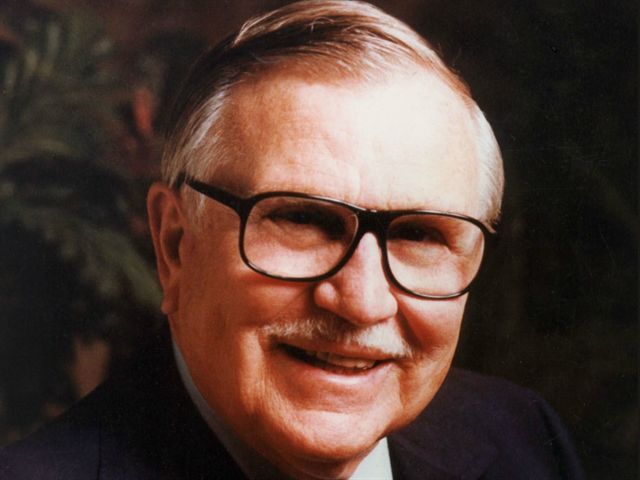
https://www.oneplace.com/ministries/thru-the-bible-with-j-vernon-mcgee/
Facebook Twitter Instagram YouTubeOur honesty with God moves His heart more than perfectly worded prayers ever can. Moses’ humble, honest prayer of confession stirred God’s heart to not yet give up on the people of Israel. Exodus 32 teaches us that, if we fail to admit we need God’s presence in our lives, we will forever stay lost in the wilderness.
References
Steve Schwetz: Welcome to Through the Bible where Dr. J. Vernon McGee is going to take us to Exodus 32 and tell us about one powerful prayer of Moses and what it has to teach us about the proper response to sin in our own lives. So as you find your seat on the Bible bus, Greg and I have a couple of really special letters that came to us recently from Canada.
Greg Clarke: Yeah, we remember when these came through. These are These came through as handwritten letters. We got them scanned on an email and I remember you and I both were so excited. So why don't you just jump in and the story will reveal itself.
Steve Schwetz: Yeah. Yeah. The first letter is Dear Steven Greg, this is my first year of listening. I love it so far. Me and my brother are listening together. I listen to it every day and I have only missed four or three.
Greg Clarke: I like that. Maybe that's Canadian.
Steve Schwetz: Yeah. Thank you for creating this ministry. I have memorized the song at the start. I write notes and I read along with McGee. My Nana suggested we do this together and we started on Good Friday 2026. My Nana and I talk about it. Thank you for working hard to make it happen. I am and I guessed this about about this age. I am 11 years old. Please send me the notes and outlines. Love Molly.
Greg Clarke: Wow. Molly, and again, we I wish you could see you know, the power of a handwritten note from a a young woman of 11 is something. But along with it came a handwritten note from Molly's Nana, her grandmother named Gay.
Steve Schwetz: Yeah. Yes.
Greg Clarke: And she writes this along with Molly's note. Dear Steven Greg and all of you lovely people at TTB. I took my first trip on the Bible bus from 1996 to 2001. I was a Christian at the time with two young daughters, six and four years old. That was way back when you had to listen live on the radio. I never wanted to miss an episode. So if I knew I was going to miss one, I would rig my cassette recorder to a timer and it would capture the episode on tape to listen later. I was super dedicated, hey?
Steve Schwetz: Wow. Hey.
Greg Clarke: Fast forward to 2026. I now have seven grandchildren and one day when the eldest two were 11 and 13, the Holy Spirit laid on my heart to suggest we do it together. Our very This is amazing, Steve. Our very first day of listening together just happened to be Friday, April 3rd. I was utterly gobsmacked. I had no idea that on this very day the bus was starting another brand new journey.
Steve Schwetz: Wow.
Greg Clarke: It was a wonderful Holy Spirit moment for all of us, but especially for me. Four days later, April 7, 2026, I fell on some ice. We live in Canada where it can snow in April and broke my ankle in four places. Ouch. It was a very traumatic experience for me to have a 5-hour surgery followed by 12 weeks of non-walking life. Whenever I'm feeling low or scared, all I have to do is turn on the broadcast and listen to the familiar voices of Steve, Greg, and of course, Dr. McGee. They are such a huge comfort for me as I navigate these rough waters at the age of 66. The kids and I are keeping up and they love to tease me if I am not up to date on my note taking or listening. It has been such a gift to have this resource. Thank you all for what you do to make it happen for me, my grandkids, and so many others. See you in the air. PS, please send me the monthly newsletter and notes and outlines. I am signing up to be a regular donor.
Steve Schwetz: Wow. Gay, that is such an encouragement and I was tracking right along with you. I figured I I'm glad you gave your age. I'm a little behind you, but in terms of grandkids and all of that.
Greg Clarke: Yeah. Not much. Yeah, you got the grandkids and everything. You haven't broken your ankle thank God.
Steve Schwetz: And I haven't broken it in four places. So thank you for experiencing that for me. Greg, why don't you pray for us as we begin?
Greg Clarke: Yeah. Father, we have smiles on our faces and our hearts are warmed that you have given us the ability to bless so many people around the world just through our simple efforts of putting out these studies all over the world and we we know you're going to do more today and in English and all across the world and we look forward to what fruit you will bear as a result of these studies in Jesus name. Amen. Now here's Through the Bible with Dr. J. Vernon McGee going through Exodus 32 and 33.
Dr. J. Vernon McGee: Now last time, friends, we looked at what certainly could be called one of the most precious sights in the word of God was to see this man Moses become an advocate and an intercessor on behalf of his people and he certainly knew the way into the heart of God. He said to the Lord when God told him get down your people that you brought out of the land of Egypt, they've sinned and Moses said I don't recall ever bringing any people out of the land of Egypt because I don't have any, but you do and they're your people and you brought them out. And he gives God some good reasons and I think that today that in our prayer life we ought to be a little more intelligent than we are and learn how to lay hold of our God. He knows our hearts, friends. That's the important thing. There's no use trying to say things with our lips to him that we don't mean with our hearts, but we do need to learn to lay hold of the mighty arm of God and I wish all of us knew that. Now when Moses went down, you wouldn't think he'd ever prayed for these people because I tell you he was angry through those commandments down, those tablets of stone. They were broken and he was hot against the people and against his brother Aaron and poor Aaron tried to cover up and if he didn't camouflage and if he didn't attempt to evade, he tried to say he poured in the gold and a golden calf walked out. Now that, my friend, is an explanation. I'm sure Moses must have smiled at that one and I know God did and I am sure that you and I can smile at that because we've offered some ridiculous explanations like that for what we've done that's been wrong. And then we saw it was a time of real sin now for the people and then Moses moved in. It was extreme surgery. But friends, when you got a cancer and I know from personal experience, you want to try to get rid of and if it means cutting away half your body, you want to get rid of it. Sin's an awful cancer and God uses extreme surgery here and there was the slaying of those that were guilty. And now I begin reading here at verse 26 actually. Then Moses stood in the gate of the camp and said, who is on the Lord's side? Let him come under me. And all the sons of Levi gathered themselves together under him and he said under them, thus saith the Lord God of Israel, put every man his sword by his side and go in and out from gate to gate throughout the camp and slay every man his brother and every man his companion, every man his neighbor. Now that's serious and it's extreme. Sure it is, but there's been awful sin. The way that liberalism got into the church. I have lived now quite a while. I can remember that when I came before a church court to be examined for the ministry, they had another boy there, another young fellow and they asked him questions and he was graduate of a liberal seminary. I have never in my life seen anybody who knew his little theology and his little Bible as he did and what he didn't know he had all mixed up and he was as liberal as they come. He didn't have any faith. He had no knowledge. He could never explain the great doctrines of the faith although he didn't believe them and the interesting thing is fact one man very impatiently said to him, well, if you don't believe it, at least you ought to know what you don't believe, but he couldn't define it. And then a dear old brother got up and he said, you know, I knew this boy's father. His father was a great preacher of the past and he was sound in the faith and I know that this boy will one of these days come around and he'll be all right and all that you know, that jargon that they used back in those days at old buddy buddy brotherhood stuff and they had a motion and they accepted it. Wasn't unanimous, but they accepted him and it made me sick at heart to be brought in at the same time with a fellow like that that didn't believe anything at all. Well, may I say to you, that's not the way Moses would have handled it or he wouldn't have drawn a sword in our day and slain the boy, but he sure would have not accepted him. He would have given that boy a Bible and told him to go out and go to Bible school and learn a little Bible and then come back if he believed it and they'll examine him again. But no, it was all that faller all and that's the way liberalism came into the organized denominations today and have taken over. You can't compromise with it, friends. It was Morley who said that compromise is immoral and I think it is especially in the church. Moses didn't do a very good job of compromising. I tell you there was extreme surgery used and we are told here that those that were guilty were slain and the children of Levi did according to the word of Moses and there fell of the people that day about 3,000 men. That cleaned up the camp pretty well by the way. If they had been in idolatry, friends, they'd have been destroyed out in the wilderness. Now a great many people are apt to say, my it was so terrible and brutal and all that. Well, let's look at it this way. Is it best to cut out the cancer here and save the person or save the nation? Think of the women and the children and the young man and the old man that were there that were not guilty and had they permitted these men who apparently are in charge now, they had taken over. What would have happened? Why that entire nation would never have entered the promised land. They'd gone into idolatry now. They would have been absolutely destroyed as a nation. And that of course is what's happened in the church in many places. I've seen church after church, friends, lose its importance, its influence and become practically nil because of the fact liberalism got in. We today are soft and we are sentimental and we are silly. Fact of the matter is we are stupid in the way that we are handling evil and the reason that we are having lawlessness in this land is because that we have not only soft-hearted judges, but they're soft-headed judges. My friend, the law is to be enforced. Now will you notice we move on to verse 30. It came to pass on the morrow that Moses said under the people, you've sinned a great sin and now I will go up unto the Lord. Peradventure I shall make an atonement for you. That is an atonement was that which was made to cover up sin. That's where it was handled before Christ came and then it was removed. Now verse 31 is actually another reason that Moses gives to God for him not destroying the people, but taking them up into the promised land. We saw three last time. Now here is the forward. And Moses returned unto the Lord and said, all this people have sinned a great sin and have made them gods of gold. What is that? Confession. If you want to get along with God, you will have to agree with him about sin. Sin is sin and it must be confessed and I don't care who it is and these are God's people and Moses goes up and said, we've sinned. This people have sinned. It's a great sin. They made God's of gold and he spelled out the sin and I think that is the thing we ought to do when we confess our sins. Spell it out before God. Now listen to Moses. Verse 32. Yet now if thou wilt forgive their sin. I don't know what Moses was going to say after that because now he changes his pack and listen to him and if not, blot me, I pray thee out of thy book which thou hast written. And Moses said, I take my place with the people. I identify myself with them and if you intend to blot them out, blot me out. Remember God told him, I can make good my covenant to Abraham, Isaac, and Jacob by just simply making a nation from you. Moses said, now I identify myself with the people. If you don't intend to bring them into the land, then blot me out with them. Now notice this is what moves the heart of God, that moves the hand of God and the Lord said under Moses, whosoever hath sinned against me, him will I blot out of my book. God deals individually and personally with sin. Verse 34. Therefore now go, lead the people under the place of which I have spoken under thee. Behold mine angel shall go before thee. Nevertheless, in the day when I visit, I will visit their sin upon them. Now God says I'll deal with it personally and I will take the people up though. I'll take those up that have not sinned and my angel will go with me. Now the angel of the Lord in the Old Testament we said is the visible presence of Christ, the pre-incarnate Christ. The angel of the Lord always reveals the presence of deity, God appearing to man. Now will you notice as we come now to chapter 33 and the Lord said under Moses, depart and go up hence thou and the people which thou hast brought up out of the land of Egypt under the land which I swear under Abraham to Isaac and to Jacob saying, under thy seed will I give it and I will send an angel before thee. Now this is the angel of the Lord and I will drive out the Canaanite, the Amorite, the Kittite, the Perizzite, the Hivite, and the Jebusite, and the Electric light. All of them are going to be driven out, you see. Now will you notice, he's now preparing them to enter the land and we'll see them resume the wilderness march in the book of Numbers. Actually, the book of Leviticus is the continuation of the instructions for the service of the tabernacle which now we'll see them begin to set up. They're building it now and it will be set up and it'll be the place where they will worship. Verse three. God says I'm taking you into this land unto a land flowing with milk and honey for I will not go up in the midst of thee for thou art a stiff-necked people lest I consume thee in the way. Now actually to say God dwelt with them and dwelt in the tabernacle is not quite accurate of course to say that. God never has occupied a building. That is always a pagan heathen notion. That 's where he met with them. Or let me turn that around. That's where they approached God in God's method and that's actually what the tabernacle teaches. Approach to God and it all as we've said reveals Christ and the way that we approach God today. It's given to us in picture form. Now we are told here in verse four and when the people heard these evil tidings, they mourned and no man did put on him his ornaments and those ornaments were heathen, remember. For instance, the earrings that they wore. They brought those and made the golden calf. That was an evidence that they worshipped a certain God. It's very much like today. A person wears a little cross. However, it's become meaningless, but the purpose of it is to reveal that the person who's wearing it is a Christian. Now verse five. For the Lord had said unto Moses, say unto the children of Israel, ye are a stiff-necked people. Now I said when God came down to redeem them, he didn't come down and redeem them because they were superior or they were better than others. God's very careful here and he's repeated this now. This is the third time and he says ye are a stiff-necked people. I will come up into the midst of thee in a moment and consume thee. Therefore now put off thy ornaments from thee that I may know what to do under thee. In other words, take down your sign that you're a heathen and pagan and take a stand for God. And I personally think that was the reason that water baptism was so all important there in the early church. It was an evidence that they had left the old and now they were taking a stand for the new and I think that it should give that kind of a testimony today. And the children of Israel stripped themselves of their ornaments by the Mount Horeb. And Moses took the tabernacle and pitched it without the camp. Now the tabernacle is being constructed. We'll have details of it given a little later, but apparently Moses set it up first without the camp. It came to pass that everyone which sought the Lord went out under the tabernacle of the congregation which was without the camp. Now this tabernacle here was a tent of meeting. The tabernacle is not constructed yet in all of its detail. It's just now a tent of meeting and it's just the bare bones of it I think frankly just nothing the world, but maybe that outer fence that went around it or just a tent put up. That's what we have here. Now it came to pass when Moses went out under the tabernacle that all the people rose up and stood every man at his tent door and looked after Moses until he was gone into the tabernacle. And it came to pass as Moses entered into the tabernacle, the cloudy pillar descended and stood at the door of the tabernacle and the Lord talked with Moses. Now we have something here that I hope that I can clarify. We have this question today. Has anyone ever seen God? The answer is of course no man has seen God at any time. And yet the Lord Jesus said, he that hath seen me hath seen the father. Now the Lord Jesus is the revelation of God because he is God, but he was veiled in human flesh, you see. Back here it was the angel of the Lord and though he was there and talked with him, talked with Moses and the Lord spake under Moses face to face as a man speaketh under his friend. Just like you and I would stand face to face and talk to each other. But Moses didn't see God as we shall see and he turned again into the camp, but his servant Joshua, the son of Nun, a young man departed not out of the tabernacle. Now this is I think the third time that we've had this mention of Joshua. You see he's the man God is preparing to succeed Moses and I don't think anyone suspected this at this time and we get to Joshua, we'll see he was probably the most unlikely person of all. Now we have Moses turning to God again. He was a great man of prayer. Verse 12 and Moses said under the Lord, see thou sayest under me, bring up this people and thou hast not let me know whom thou wilt send with me. Yet thou hast said, I know thee by name and thou hast also found grace in my sight. Now therefore I pray thee if I have found grace in thy sight, show me now thy way that I may know thee, that I may find grace in thy sight and consider this nation is thy people. The thing that Moses wanted is the thing that Paul said that I might know him and the power of his resurrection. It's the same thing Philip meant. Show us the father and it suffice us and I think every sincere real child of God today has a desire to want to know God and to want to know Christ. Now God answers him verse 14 and he said, my presence shall go with thee and I'll give thee rest. Now you see it's the presence of God and he said under him, if thy presence go not with me, carry us not up hence. Moses knew he couldn't make it on his own. For wherein shall it be known here that I and thy people have found grace in thy sight. Is it not in that thou goest with us? So shall we be separated, I and thy people from all the people that are up in the face of the earth. That's important to notice. God made them a peculiar people for a very definite reason as the church is to be a peculiar people today and that means a people for God. That doesn't mean we're to be oddballs. Verse 17 and the Lord said under Moses, I will do this thing also that thou hast spoken for thou hast found grace in my sight and I know thee by name. Now Moses becomes very intimate you see with God. He said, I beseech thee, show me thy glory. He couldn't see God face to face you see actually. He said, I'll make all my goodness pass before thee and I will proclaim the name of the Lord before thee and I will be gracious to whom I will be gracious and I'll show mercy in whom I will show mercy. And Paul uses that in Romans, you remember. God is sovereign and I don't have time to go into that today. Verse 20. And he said, thou canst not see my face for there shall no man see me and live. And you just well write that down, friend. You're not going to see God face to face, not today. And the Lord said, behold there is a place by me and thou shalt stand upon a rock. It shall come to pass while my glory passeth by that I will put thee in the cleft of the rock and will cover thee with my hand while I pass by and I will take away mine hand and thou shalt see my back parts. That's been an unfortunate translation what they would see a representation of God because God is a spirit. They that worship him must worship him in spirit and in truth. But God says, but my face shall not be seen. That is only a representation of God. Now the glory, the Shekinah glory was that. You remember the Lord Jesus said that when he came the second time that would be the sign of the son of man in heaven. I think that sign is the Shekinah glory. I'm of the opinion that that's what it will be. But in that day God's glory was revealed. Now when Christ came, he took upon himself human flesh and when he did, the glory was not there, you see. It was not there when he came. He took a very humble place, but he was God, you see and therefore that's the reason he could say he that hath seen me hath seen the father. Now you and I today are not going to see God. We're going to see the Lord Jesus Christ and he will be in human form because that's what he took when he was down here and he did days in a glorified body and we shall be like him. This is the anticipation and the hope of the believers, those who are walking today by faith, friends, and that's where Moses is going to walk, but now he says, your presence must go with us and we need his presence today, friends, to face the problems of every day. This brings us to the end of chapter 33. We take up a chapter 34 and until then may God richly bless you, my beloved.
Steve Schwetz: If you've been going it alone, why don't you download Dr. McGee's free booklet on Romans chapter eight, Living the Christian Life God's Way, from our app or at ttb.org or call 1-800-65-BIBLE for help finding it. I'm Steve Schwetz and I'll meet you back here next time as we make our way through the Bible.
Guest (Male): We're grateful for the faithful and generous support of Through the Bible's partners whom God uses to take the whole word to the whole world.
Related Episodes
About Thru the Bible
Thru the Bible takes the listener through the entire Bible in just five years, threading back and forth between the Old and New Testaments. You can begin the study at any time. When we have concluded Revelation, we will start over again in Genesis, so if you are with us for five years you will not miss any part of the Bible.
Other Thru the Bible Programs:
Thru the Bible - Minute with McGee
Thru the Bible - Questions & Answers
Thru the Bible - Sunday Sermon
About Dr. J. Vernon McGee
John Vernon McGeewas born in Hillsboro, Texas, in 1904. Dr. McGee remarked, "When I was born and the doctor gave me the customary whack, my mother said that I let out a yell that could be heard on all four borders of Texas!" His Creator well knew that he would need a powerful voice to deliver a powerful message.
After completing his education (including a Th.M. and Th.D. from Dallas Theological Seminary), he and his wife came west, settling in Pasadena, California. Dr. McGee's greatest pastorate was at the historic Church of the Open Door in downtown Los Angeles, where he served from 1949 to 1970.
He began teaching Thru the Bible in 1967. After retiring from the pastorate, he set up radio headquarters in Pasadena, and the radio ministry expanded rapidly. Listeners never seem to tire of Dr. J. Vernon McGee's unique brand of rubber-meets-the-road teaching, or his passion for teaching the whole Word of God.
On the morning of December 1, 1988, Dr. McGee fell asleep in his chair and quietly passed into the presence of his Savior.
Contact Thru the Bible with Dr. J. Vernon McGee
Mailing Address
Thru the Bible, Inc.
P.O. Box 7100
Pasadena, CA 91109
In Canada:
Box 25325,
London, Ontario
N6C 6B1
Phone Number
(626) 795-4145 or
(800) 65-BIBLE (24253)


